
Wednesday, April 12, 2023

What is the Legal Alcohol Limit in New Jersey?

In New Jersey, law enforcement utilizes strict guidelines on DUI/DWI traffic stops. A police officer can conduct a traffic stop if they perceive that a driver is exhibiting impaired driving behavior. The New Jersey Division of Highway Traffic Safety imposes a Drive Sober or Get Pulled Over campaign to prevent impaired driving accidents. Strict adherence to the BAC limits when driving is required.

While New Jersey law is unique in that a DWI conviction would not go on your criminal record, it doesn’t mean that the consequences for being charged and convicted are any less severe. Individuals who are convicted of a DWI can face expensive fines, mandatory installation of an ignition interlock device, license suspension, and revocation, as well as extensive jail time. 

If you have been charged with a DUI in New Jersey, it is crucial to seek the help of an experienced New Jersey DUI lawyer. At the Kugel Law Firm, we offer quality legal services to individuals who have been charged with impaired driving offenses in New Jersey. Our attorneys provide compassionate but aggressive legal representation. Call us today at (973) 854-0098 to learn more about how we can help.

Legal Alcohol Limits in New Jersey

In New Jersey, drivers are subject to different blood alcohol concentration (BAC) thresholds depending on the type of driver they are. While the legal limit for most drivers is .08%, some drivers can be charged with driving under the influence (DUI) even if their BAC is lower than .08%.

Implied Consent Laws

New Jersey law follows the rule of implied consent. This means that anyone who chooses to drive in the state is assumed to have given their consent to a breath or chemical test used to determine their BAC levels. If they are stopped or arrested due to suspicion of driving while impaired, drivers are assumed to have given their consent to BAC tests.

If a driver suspected of a DWI refuses a breath test they may be subject to harsher penalties than those who willingly subject themselves to the breath test. Additional penalties can include a longer license suspension period, longer interlock requirement, and fines. There are defenses to refusal to submit to a chemical test, an experienced DWI lawyer can review the facts of your case and determine if any defenses exist. 

Drivers 21 Years Old and Above

For drivers who are 21 years old or older and legally allowed to drink alcohol, the BAC limit is .08%. If you are found with a BAC of .08% or higher, you may be charged with a DUI, and the charges and fines you face will increase proportionally to your BAC level upon arrest.

For a first-offense DUI in New Jersey, there are different penalty tiers based on your alleged BAC reading at the time of the traffic stop:

  • Tier 1 applies to BAC readings from .08% to below .10% 
  • Tier 2 applies to BAC readings from .10% to below .15% 
  • Tier 3 applies to BAC readings of .15% and above. 

The penalties for each tier may vary but typically include license suspension, installation and mandatory use of an Ignition Interlock Device depending on the tier of the offense, potential jail time, and mandatory participation in IDRC classes. For first offenses, the penalties for each tier are as follows.

Tier I

Drivers convicted of a Tier I offense can be subject to license suspension until an IID is installed. Defendants may also be required to use the IID for at least three months. In addition, they can spend up to 30 days in jail and be required to attend Intoxicated Driver Resource Center (IDRC) classes anywhere from 12 to 48 hours.

Defendants would also be required to pay fines as determined by the court. A defendant may be required to pay up to $400 aside from court fees. Additional fees can include a $230 IDRC fee, a payment to the Drunk Driving Enforcement Fund as well as the Alcohol Education and Rehabilitation Fund (AERF). Additional surcharges including $1000 annually must also be paid to the Motor Vehicle Commission along with a $75 fee to the Neighborhood Services Fund.

Tier II

Drivers convicted of a Tier I offense can be subject to license suspension until an IID is installed. Defendants may also be required to use the IID for at least seven months. In addition, they can spend up to 30 days in jail and be required to attend IDRC programs anywhere from 12 to 48 hours. As well as the imposition of monetary fines and surcharges as in Tier I. 

Tier III

Tier III offenders may face a mandatory license suspension of up to 6 months and the use and mandatory installation of an IID during the suspension period and up to 15 months after their license has been reinstated. Like in a Tier II offense, defendants are also required to attend IDRC programs for up to 48 hours and may be subject to a 30-day jail sentence.

Defendants convicted of Tier II and Tier III DUI can also be required to pay a $300 – $500 fine along with a $125 DWI surcharge and court fees. Fees of $50 to the Victims of Crime Compensation (VCCO), $230 to the IDRC, and $100 each to the DDEF and the Alcohol Education and Rehabilitation Fund (AERF) can also be required. Additional surcharges including $1000 annually must also be paid to the Motor Vehicle Commission along with a $75 fee to the Neighborhood Services Fund.

Penalties for DUI convictions can increase with each subsequent offense and how often a person is convicted during a specific time period. Regardless of the tier or the number of previous convictions, you need to get the help of a skilled New Jersey DUI attorney who can advocate for your rights. Call The Kugel Law Firm today at (973) 854-0098 to speak with one of our qualified attorneys.

Drivers Below 21 Years Old

Drivers who are under 21 years old and therefore not legally allowed to drink alcohol must adhere to a zero-tolerance policy. If an underage driver is caught driving with any BAC level, they may face charges for underage DWI. The charges and penalties will vary depending on the driver’s age and BAC level at the time of the arrest.

Underage drivers with a BAC level below 0.07% may be subject to a suspension of their driver’s license for up to 90 days, as well as 30 days of mandatory community service, attending an IDRC class, and completing a highway safety program. 

If the underage driver is convicted while under the age of 17, the suspension will be applied once they reach the age of 17. If an underage driver has a BAC of .08% or higher, they will be prosecuted as an adult. Additionally, if an underage driver is found to be in possession of alcohol, they may face a suspension of their driver’s license if they are convicted.

Commercial Driver’s License Holders

Drivers who hold a Commercial Driver’s License (CDL) must adhere to a stricter BAC limit while operating a commercial vehicle. If a CDL holder is caught driving a commercial vehicle with a BAC level of .04% or higher, they may be charged with a DUI. However, if the CDL holder is driving a non-commercial vehicle, such as their personal vehicle, they will be subject to the regular BAC limit of .08%.

If a CDL holder is convicted of DUI, in addition to penalties imposed on their personal license they will also lose their CDL for a minimum of one year. 

Other Aggravating Conditions

If you are charged with a DWI with a person under the age of 17 in the car, you may be subjected to an additional disorderly persons offense under N.J.S.A. 39:4-50.15 or DWI with a Minor. Penalties include up to six months in county jail, a $1,000 fine, license suspension of up to six months, and community service. Depending on the circumstances, you may also be charged with Endangering the Welfare of a Child (N.J.S.A. 2C:24-4).

Impaired Driving Offenses

Regardless of your BAC, you may still be charged with a DUI if the officer conducting your traffic stop determines that your driving behavior is a risk to yourself and to others. This determination is due to the fact that the effect of alcohol can be subjective depending on factors such as a person’s physiology and alcohol tolerance.

Even if a driver’s BAC falls below the limit for their driver category, they can still be charged with a DUI. You are likely to be pulled over under the Drive Sober or Get Pulled Over if you exhibit the following behavior while driving:

  • Swerving
  • Driving too slow or too fast
  • Braking erratically
  • Driving over the traffic line
  • Committing traffic violations such as speeding, running a red light or taking too long to pass in a green light.

The arresting police officer can administer a field sobriety test to determine whether the person is indeed driving while impaired. It is important to remember that the impairment measured in this case is whether a person’s driving ability and judgment are the same as that of a sober person. While a field sobriety test is not enough to convict, prosecutors can use the results of the tests to support the argument that the person was driving while impaired.

Importance of Hiring a Skilled New Jersey DUI Lawyer

Facing DWI charges in New Jersey can be an uphill battle. Aside from the legal penalties mentioned, the repercussions of a DWI conviction can have a significant effect on a person’s professional and personal life. Even though a DWI conviction will not show up on criminal records, a license suspension or revocation can leave you unable to go to work. Some employers may outright deny you employment if you have been convicted of or are convicted of a DWI. For commercial drivers, a DWI conviction can make it more difficult to find job prospects. If you are in the midst of a custody dispute, a conviction on your record can affect being granted visitation and custody rights of your children. 

For professional license holders, you may be subject to disciplinary action depending on the standards of your license board. Most license boards can have strict penalties for those who have exhibited negligence on the safety of others. You may be required to undergo counseling or rehabilitation programs and to prove that the DWI conviction is the result of an isolated incident. Professionals who can be subjected to these standards can include doctors, teachers, pharmacists, nurses, pilots, attorneys, and other professions which require looking after the welfare of others.

Hiring a lawyer who is not only well-versed in the relevant laws but who can also work with you in helping you understand the legal implications of your charges and your rights is important. There are no options to reduce or mitigate DWI charges in New Jersey. While that may be the case, your attorney can still take a careful look at the evidence surrounding your case and establish a tailored legal strategy that can secure the best possible outcome.

Working with Top-Rated New Jersey DUI Attorney Rachel Kugel

Being convicted of a DWI in New Jersey can have long-standing consequences. Understanding your rights and responsibilities under the law is important especially when it comes to the legal alcohol limit for your driver category. If you have been charged with DWI in New Jersey, seek the help of an experienced attorney as soon as you can. 

The Kugel Law Firm is a highly-rated law firm in New Jersey composed of legal professionals who have dedicated their careers to defending the rights of persons charged with drunk driving offenses. Led by top-rated DWI attorney Rachel Kugel, the firm is committed to providing quality personalized legal defense strategies to achieve the best possible outcome for its clients. You don’t have to navigate your charges alone – the team at The Kugel Law Firm is here to help. Contact us today at (973) 854-0098 to speak with one of our skilled attorneys.


from Kugel Law Firm – DWI/DUI Defense in New York & New Jersey https://thekugellawfirm.com/what-is-the-legal-alcohol-limit-in-new-jersey/

Tuesday, April 4, 2023

How Do You Get a DUI Dismissed in New Jersey?

Charges of DUI in New Jersey can lead to serious legal consequences such as restrictions on your ability to drive, suspensions on your license, the installation of an ignition interlock device on your vehicles, and imprisonment if you are convicted. The repercussions of a DUI conviction can affect not only your personal life but also your professional prospects.

DUI charges can sometimes be dismissed if you have the assistance of an experienced New Jersey DWI attorney. A skilled attorney can help you understand the impact of your charges and represent your best interests in court. At The Kugel Law Firm, we thoroughly investigate the cases we handle, which allows us to build a personalized legal defense. We understand the severity of DUI charges and work hard to represent our clients’ best interests. Our trial-ready attorneys are available for a consultation. Call (973) 854-0098 today to schedule a free strategy session today.

Is It Possible To Negotiate a Plea Bargain for a DUI Charge in New Jersey?

A plea bargain is an agreement between the prosecutor and the defendant regarding the terms of the case. In a plea agreement, the defendant agrees to plead guilty to lesser charges than the original charges in exchange for the more serious charges being dismissed. 

In some instances what is meant by “bargain” is where a defendant pleads guilty to the original charge in exchange for lesser penalties during sentencing. For these cases, the prosecutor will recommend the minimum sentencing penalties, but it is up to the judge if they choose to follow the prosecutor’s recommendations.

While plea bargains happen regularly in the New Jersey criminal justice system, some charges such as DWI cannot be commuted or mitigated. Also, a DUI/DWI charge in New Jersey is treated as a quasi-criminal offense, meaning that, while it does not go into a defendant’s criminal history, the penalties upon a conviction can still be severe.

In 2005, the state issued guidelines regarding how the prosecution should treat DWI charges as well as DWI charges wherein the defendant refused a chemical test. In the interest of uniformity in the prosecution of these charges in New Jersey, defendants charged under N.J.S.A. 39:4-50 (the impaired driving statute) and N.J.S.A. 39:4-50.2 (the statute concerned with the refusal of the BAC test) are not to be given the opportunity to use a plea bargain to reduce or commute their charges. 

One of the limited exceptions to this rule is when a defendant has been charged with both a DWI and a test refusal charge on a second or subsequent offense court may be open to allow a dismissal of the refusal charge if the defendant pleads guilty to the DWI. In cases where there are multiple charges levied against the defendant and these charges are not related to the DWI or not a charge under statutes limiting plea bargaining, a prosecutor may offer to commute the charges or dismiss them.

While using a plea bargain and commuting DWI charges have been prohibited by the law, it is still possible to get a DWI charge dismissed or reduced when there is a legal reason to do so. If there is a breach in the protocol or lack of evidence that could lessen the chances of a prosecutor making a case against the defendant, the prosecutor can dismiss the DWI charges with the approval of a judge. This would not be a “plea bargain” and therefore can be accepted under the right circumstances. 

The rate of dismissal for DUI charges in New Jersey in 2018 was 24% which is double the rate of dismissals in 2008. There is a one in four chance that your charges would be dropped. To further increase your chances of a dismissal, seeking the help of an experienced DWI attorney who can thoroughly investigate the circumstances of your case to identify any inconsistencies is important. Contact The Kugel Law Firm today to learn more about how we can help and to schedule a free strategy session.

Elements of a DUI/DWI Charge

The elements in a legal charge are the factors that the prosecution must prove beyond a reasonable doubt. In a DWI case, the following circumstances must be proven to convict the defendant successfully.

  • That the defendant was operating a vehicle
  • That the defendant’s driving capacity was impaired due to the influence of alcohol or drugs or that they had an illegal amount of drugs or alcohol in their system while they were driving the vehicle

Aside from these two elements, the defense can also challenge other facts of the case such as the legitimacy of the traffic stop, whether the arresting officers did the proper procedure, whether the field sobriety tests were administered properly, and how the court handled the case. 

At The Kugel Law Firm, top-rated DWI attorney Rachel Kugel is familiar with the ins and outs of a DWI charge. Our team of legal professionals can help you understand your charges and represent your best interests in court. Schedule a free strategy session today.

Possible Defenses to New Jersey DUI Charges 

When trying to get a charge dismissed, the defense can challenge the legal basis of the charges or the facts of the case itself. This can be done through careful investigation and scrutiny of the evidence and the statements of the defendant as well as the arresting officers, among other things. Possible defenses can include:

Lack of Probable Cause

The New Jersey Constitution prohibits conducting illegal and unreasonable searches and seizures. When you get pulled over by law enforcement, they must have probable cause as to why they are making the traffic stop. Probably cause means that there is a reasonable suspicion that a crime has been committed or that you were committing a motor vehicle offense when you were stopped. If the probable cause cannot be established, any evidence gathered through the arrest is considered “fruit of the poisonous tree” and will be inadmissible in court. Thus the charges can be dismissed.

Violations in the Arrest Protocol

Defendants in a DWI case have to be read their Miranda rights when an arrest is being made. It is also important that the person being arrested is clearly informed that they are under arrest. If the defendant is not read their rights upon the arrest can cause any evidence gathered in custody to be inadmissible in court. Miranda rights are a requirement upheld by the US Constitution. 

For instances of a test refusal, defendants should also be read an implied consent warning in a language they understand. 

Challenging the Evidence

The breath test, the chemical test, the field sobriety test, and even the arresting officer’s recollection of the arrest can all be challenged as part of the defense. If the tests were administered incorrectly or if there are circumstances that caused a false positive, it can serve as a viable challenge to the prosecution’s case.

In New Jersey, law enforcement officers need a certification to be able to administer a breath test. If the arresting officer does not have the necessary and current credentials, it can nullify the results of the breath test and render this evidence inadmissible. Breath tests are also required to be calibrated and information regarding the foundational documentation must be provided to the defense during the discovery period. 

The same thing applies to field sobriety tests. Only tests approved by the NHTSA have been studied and found to be meaningful in determining the merits of a DWI prosecution. The use of non-standardized sobriety tests, while not banned, often do not carry much evidentiary weight. The tests should also be conducted in a well-lit area with no debris around. The defendant’s physical constitution should also be able to withstand the test. Attributes like being overweight, over a certain age, or suffering with physical limitations or medical issues should be taken into consideration by the officer evaluating these tests. 

The defense is also welcome to introduce its own evidence. What seems to be red eyes due to being intoxicated can be a result of allergies. What the arresting officers observed as impaired driving behavior can be a result of an underlying medical condition. Additional corroboration by a medical expert or a specialist may be necessary for these circumstances.

Legal Inadequacies

The prosecution is required to provide evidence relevant to the DUI/DWI charges as part of the discovery process. If this is not followed, the defense can file a  motion to force the prosecution to produce the evidence. If they still do not comply with the court’s order, the case may be dismissed entirely.

The defendant also has the right to a speedy trial. DUI/DWI cases are supposed to be resolved within 60 days. Any delays caused by the prosecutor which cause the case to surpass this threshold can be used as grounds to dismiss the charges.

Depending on the circumstances of your specific DUI/DWI case, a different defense could be more applicable. At The Kugel Law Firm, we provide quality legal counsel and representation and work diligently to investigate and build the best defense strategy applicable. We understand that a DWI conviction can have long-standing consequences on a person’s life. You don’t have to face your charges alone. Contact us today at (973) 854-0098 to schedule a consultation.


from Kugel Law Firm – DWI/DUI Defense in New York & New Jersey https://thekugellawfirm.com/how-do-you-get-a-dui-dismissed-in-new-jersey/

Tuesday, March 14, 2023

Will you have to install an ignition interlock device if you are convicted of a New Jersey DWI?

Under the new DWI law that went into effect in December of 2019, an ignition interlock device is now mandated as a DWI penalty in pretty much every sentence, whether 1st, 2nd or third offense, the length of time that you need to have can vary, and whether one can drive once installed is also a variable which will depend on the person’s record, (whether this is a first, 2nd or third offense) as well as their blood alcohol content (whether it is below .15 or above .14, or involves drugs or whether there’s a refusal). So there are factors that can impact whether one can drive with it and for how long one will have to have it installed. There’s also a provision for those individuals who do not own a motor vehicle. Those people can have a prompt license suspension rather than an ignition interlock in most circumstances. So the law is definitely better than it was before 2019 from New Jersey drivers, but it’s still really complicated. It is important to understand your exposure which is based on so many factors that can impact it. For those reasons, you should definitely speak to a New Jersey DWI lawyer as soon as possible.

Ignition Interlock Devices in New Jersey

New Jersey DWI lawyer

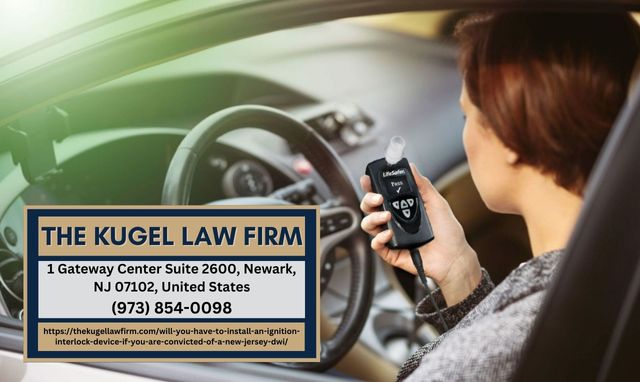
An ignition interlock device is mounted on the dashboard in front of the passenger seat. It is connected to the car’s ignition system and designed to prevent the vehicle from starting if alcohol is detected on the driver’s breath. Before starting the engine, the driver must blow into the device and provide a breath sample. While the engine is running, the device will intermittently prompt the driver to submit additional breath samples to verify that there is no alcohol in the driver’s system.

Every motor vehicle owned, operated, or leased by a DUI offender in New Jersey must have an ignition interlock device installed until the court-ordered license suspension period expires. Upon being sentenced to install an ignition interlock device, the offender receives a suspension notice from the Motor Vehicle Commission containing instructions for obtaining the device.

The ignition interlock device must remain functional in the offender’s vehicle during and after the license suspension period, which is a minimum of six months to one year for a first DWI conviction and a minimum of one to three years for subsequent convictions. If the convicted person wishes to remove the device from their vehicle, they must surrender their driver’s license.

Operating any vehicle that does not have an ignition interlock device before the indicated period is over is prohibited under New Jersey’s DWI law. Failure to comply with the rules may result in the offender’s driver’s license being suspended for one year and other penalties as applicable by law.

At The Kugel Law Firm, our skilled New Jersey DWI attorneys, led by top-rated DWI attorney Rachel Kugel, can assist you if you have been ordered to install an IID device as part of your conviction. Our attorneys have the experience and knowledge needed to walk you through your rights and responsibilities and advocate for your best interests. To learn more about how we can help, contact us today at (973) 854-0098 to schedule a consultation.


from Kugel Law Firm – DWI/DUI Defense in New York & New Jersey https://thekugellawfirm.com/will-you-have-to-install-an-ignition-interlock-device-if-you-are-convicted-of-a-new-jersey-dwi/

Can I refuse to take a portable breath screening test in New Jersey?

A portable breath screening test is very different from the chemical test that you’re given at a police station after arrest. and it’s typically something that the officer carries with them and is given or offered at the roadside, as opposed to at a police station later. It’s a different type of chemical test that’s not covered by the refusal statute, so you can choose to refuse that test without any additional penalties.

If you have been pulled over and offered a portable breath screening test, a DUI lawyer can help you determine whether it’s in your best interest to refuse or take the breathalyzer test. At The Kugel Law Firm, our team of New Jersey DUI attorneys may be able to help you analyze the circumstances of your arrest and investigate any potential issues with the test or arrest procedure. This includes determining if the officer had probable cause to stop you and if the test was administered accurately. Call us at (973) 854-0098 to schedule a consultation.

Difference Between Portable Breath Tests and Standardized Field Sobriety Tests In New Jersey

In New Jersey, there are two commonly used methods for determining whether a driver is under the influence of alcohol without a chemical test: Portable Breath Tests (PBTs) and Standardized Field Sobriety Tests (SFSTs). While both tests measure a driver’s level of intoxication, they are administered differently and serve different purposes. Knowing the differences between these two tests is critical when it comes to understanding penalties for DUI charges.

DWI lawyer in NJ

Portable Breath Test

In New Jersey, police officers employ the use of a Portable Breath Test (PBT) to obtain a reading indicating the level of intoxication of a suspected drunk driver. However, the results obtained from PBTs cannot be used as evidence of intoxication in court trials. This is due to the fact that admitting PBTs as evidence have not been discussed in  a Frye hearing, which is a judicial proceeding where a judge determines whether a particular “scientific” evidence is generally accepted in the scientific community.

Because of this limitation, law enforcement officials seldom disclose PBT readings in their reports as evidence. Instead, they use the results as a guide to determine whether an individual should be charged with driving under the influence (DUI), particularly in situations where the suspect’s impairment appears to be borderline.

Standardized Field Sobriety Tests

The National Highway Traffic and Safety Administration (NHTSA) endorses the Standardized Field Sobriety Tests (SFSTs), which are administered by police officers to measure impairment and correlate to a blood alcohol concentration (BAC) of over .08%. The SFST consists of three parts: the horizontal gaze nystagmus, the one-leg stand, and the walk-and-turn. 

To ensure reliability, it’s crucial to understand that the components of the SFST must be administered consistently according to prescribed instructions. Trained officers are taught to identify specific indicators when evaluating a person’s test performance, and the tests themselves do not have a strict pass/fail outcome but rather “decision points” to assist officers in determining satisfactory performance. Refusing to take the SFSTs is not mandatory, much like the PBT, but a judge may interpret refusal as a sign of guilt.

Whether or not you accept to take a portable breath screening test during your traffic stop, an experienced New Jersey DUI attorney can assist you in building a tailored legal defense strategy against your charges. At The Kugel Law Firm, our DUI attorneys have dedicated their practice to providing quality legal counsel and representation to New Jersey residents charged with impaired driving offenses. Contact us today at (973) 854-0098 to schedule a free consultation.


from Kugel Law Firm – DWI/DUI Defense in New York & New Jersey https://thekugellawfirm.com/can-i-refuse-to-take-a-portable-breath-screening-test-in-new-jersey/

Wednesday, February 22, 2023

Can I get a conditional license if I’m convicted of a New Jersey DWI/DUI?

In New Jersey, there’s no such thing as a traditional conditional or hardship license or privilege. If convicted of a DWI/DUI, it used to mean a hardcore suspension regardless of whether it was a first, 2nd, or third DWI offense. However, the law changed in December of 2019. And now if you have a first offense DWI/DUI and a blood alcohol reading of less than .15 you’ll actually be allowed to install and maintain an ignition interlock device and once installed, the department of motor vehicles will give you a special interlock license that will allow you to drive without any conditions on time or place during the pendency of the installation requirement. So once the device is actually removed, you’ll be able to go back to motor vehicles and get your full regular license without any interlock requirement. So, after 2019, the law at least as to first offenders got a lot freer in terms of your ability to drive even after a DWI/DUI conviction. It can still be confusing and tough to navigate the system to get the best result and avoid a lengthy interlock requirement. In addition, there are defenses that exist that could save you from the DWI/DUI conviction(and the collateral consequences that go with it) altogether.

Getting the assistance of a knowledgeable New Jersey DUI attorney can provide you with a sense of comfort when dealing with your case. At Kugel Law Firm, we have a team of experienced DUI attorneys who can guide you through the legal process of your DUI case. They possess the required expertise and legal knowledge to construct a robust legal defense to ensure the best possible result for your case. To book a free strategy session, please call (973) 854-0098.

New Jersey DWI lawyer

Ignition Interlock: Installation and Duration

In the event that an individual is convicted of their first DUI offense, they may be obligated to install an ignition interlock device for a period of six (6) months to one (1) year upon the restoration of their driver’s license. However, if their blood alcohol content (“BAC”) level is 0.15% or higher, they will be required to install the device for a mandatory period of six (6) months to one (1) year after their license has been restored. In the case of a second or subsequent offense, the installation of the ignition interlock device is mandatory for the entirety of the license suspension period, as well as one (1) to three (3) years following license restoration.

In the event that an individual or their family member is mandated to install an ignition interlock device, it is required that every motor vehicle which is owned, leased, or regularly operated by the offender be equipped with a Breath Alcohol Ignition Interlock Device (BAIID). The Breath Alcohol Ignition Interlock Device (BAIID) must be approved and certified by the Chief Administrator of the New Jersey Motor Vehicle Commission. The device is calibrated to have an alcohol set-point of 0.05% breath alcohol concentration, which is the threshold at which the ignition is locked. Engaging in any actions that aim to tamper with the device is strictly prohibited, as it can lead to severe consequences such as facing charges in both criminal and civil courts. If you are facing DUI charges in New Jersey, our team of experienced DUI attorneys at Kugel Law Firm can defend your rights and assist you throughout the legal process. To book a consultation free of charge, please contact us at (973) 854-0098.


from Kugel Law Firm – DWI/DUI Defense in New York & New Jersey https://thekugellawfirm.com/can-i-get-a-conditional-license-if-im-convicted-of-a-new-jersey-dwi-dui/

Friday, February 17, 2023

Am I entitled to a lawyer before I decide to take a breathalyzer test if I am arrested for a DUI/DWI in New Jersey?

There’s a lot of confusion around this question, and I get this question all the time. People want to know, do they have the right to speak to an attorney, or to work with an attorney in deciding whether or not they should take a breath test after they’re arrested for DWI/DUI in New Jersey? Can they call anybody? Do they get a phone or a phone book, anything like that? 

Well, the answer in New Jersey is simply no. The obligation to take a chemical test is actually covered by something called the implied consent law. Just by driving a car in the state of New Jersey, you’re agreeing that if you’re ever properly arrested for DWI/DUI in New Jersey, you will submit to a chemical test of your breath. You can choose not to do so. But if you do, there are consequences and penalties for that. The police have to read you an implied consent form. And in that standard form statement, that warning actually does show your rights and obligations with regard to the breath test, including the fact that you do not have a right to an attorney. 

The implied consent form says you have no legal right to have an attorney, physician, or anyone else present for the purpose of taking the breath samples. And you have no legal right to refuse to give or delay giving samples of your breath. You don’t have a right to an attorney before deciding whether to give samples of your breath in New Jersey and just keep in mind that if you choose not to do so, there are penalties for it.

If you or a loved one is facing charges of DWI/DUI or refusing to take a breathalyzer test, it is important to consult with an experienced New Jersey DUI attorney right away. A skilled lawyer may be able to help protect your rights and your freedom. 

New Jersey DWI attorney

Implied Consent in New Jersey

New Jersey, along with other U.S. states, has laws that require anyone driving on roads to give their consent to be subject to a chemical breath or blood test for alcohol content if they are stopped or arrested because of drunk driving. New Jersey drivers are deemed to have “implied consent”. This consent is a condition that someone who is applying for a driver’s license must satisfy.

Consequences of Refusing Breathalyzer Tests

Implied consent in New Jersey means that if anyone is stopped because of suspicion of driving under the influence, law enforcement officers can subject them to a breathalyzer. Drivers who refuse to take a chemical or breath test can have their license suspended and they can be subject to an increase in their insurance rates.

Refusing to submit to a breath test does not mean that the driver is not going to be convicted of DUI because although the state does not have the result to show that a driver has a high BAC, prosecutors may be able to use the testimony of an officer who stopped the driver or other witnesses in the area. Eyewitnesses, for example, may be able to testify that your driving was reckless or erratic. The officer who stopped you may also testify that you showed signs of intoxication such as the strong odor of alcohol, bloodshot or glassy eyes, slurry speech, or unsteadiness.

Refusing to take a test automatically results in license suspension. This is why it is important to seek an experienced DUI defense attorney who can help you protect your freedom and your future if you’re facing DUI/DWI charges in New Jersey.

Speak to an Experienced DUI/DWI Lawyer at The Kugel Law Firm

The refusal to take a breathalyzer test in New Jersey carries a separate penalty from a DWI. If you are convicted of both charges, penalties can be doubled. This is why it is important to seek the help of an experienced DUI/DWI lawyer right away. 

The Kugel Law Firm is committed to protecting our client’s rights and freedom. Attorney Rachel Kugel and our team have repeatedly demonstrated our ability to succeed in the most challenging and complex drunk driving cases in New Jersey. Contact us today to schedule a free consultation.


from Kugel Law Firm – DWI/DUI Defense in New York & New Jersey https://thekugellawfirm.com/am-i-entitled-to-a-lawyer-before-i-decide-to-take-a-breathalyzer-test-if-i-am-arrested-for-a-dui-dwi-in-new-jersey/

Thursday, February 16, 2023

Is DWI a criminal offense in New Jersey?

No, the good news is that DWI is a title 39 offense found in the statute related to motor vehicles. But don’t be lulled into believing that because it isn’t a crime it isn’t a serious offense. DWI can have harsh consequences including license revocations or suspension, ignition interlock requirements, fines, classes, thousands in surcharges, and even jail of up to six months. Though it will not give you a criminal record, it can have collateral consequences to your life and livelihood such as immigration issues, professional licensing issues, increased insurance rates, commercial driver’s license consequences, as well as potential issues for things like pending divorce or custody matters.

A skilled New Jersey DWI lawyer may be able to help you protect your rights and your freedom. They may also be able to help you seek alternative avenues that could lead to the best possible outcome for your case. At The Kugel Law Firm, experienced NJ DWI attorney Rachel Kugel has years of experience helping clients with their DWI cases. Contact us today to learn more about how we can help.

New Jersey DWI is a Quasi-Criminal Offense

DWIs are often referred to in New Jersey as “quasi-criminal” offenses. Drivers who are charged with DWI have the same rights as defendants in criminal cases. DWI offenses are considered quasi-criminal because even though they do not go on a person’s criminal history, they can have serious penalties. DWI convictions are subject to heavy penalties as well as the forfeiture of one’s driver’s license.

DWI traffic or quasi-criminal charges can be serious. They carry prison detainment as well as fines and penalties. The information of a person’s conviction is also kept in Motor Vehicle Commission files and sent to all United States courts. The information cannot be removed by a lawyer unless it is proven that the driver is innocent and the charges are dropped. The information is kept on file and updated every time the driver does another DWI violation.

DWI attorney in NJ

If you or a loved one has been charged with a DWI in New Jersey, it is important to seek the legal advice of an experienced DWI lawyer right away. A skilled lawyer may be able to help you protect your rights and fight for your freedom. 

At The Kugel Law Firm, experienced DWI attorney Rachel Kugel has helped many clients receive a more favorable outcome for their DWI Cases. Contact us today to schedule a consultation. 

Pretrial Intervention Program or PTI

Pretrial Intervention Programs provide first-time offenders (generally a non-violent offense or misdemeanor) with the chance of rehabilitation rather than being punished for New Jersey’s drug offenses. PTI’s rehabilitative model recognizes that there can be a connection between the offense charged and the needs of an offender for rehabilitation.

Rehabilitative services that are provided early on can be reasonably expected to prevent future criminal behavior. The rehabilitative services provided by a PTI emphasize that criminal behavior can often be influenced by sociocultural, economic, and other factors.

PTI’s requirements and guidelines for admission are laid out by Rule 3:28 in the state’s Rule of Courts. PTI seeks to address personal problems that are likely to lead to criminal activity and deter any future crimes or disorderly conduct by defendants.

It is important to speak to an experienced DWI lawyer if you are facing DWI charges, especially if it is your first time. A skilled attorney may be able to help you get into the program and help you seek other avenues that can ultimately lead to a favorable outcome for your case. Contact the Kugel Law Firm today to speak with an experienced DWI lawyer in New Jersey. 

Speak to an Experienced New Jersey DWI Lawyer at The Kugel Law Firm

A DWI conviction will remain on a person’s record for a long time. Employers, loan officers, and others who will need to conduct a background check on the convicted person will be able to see this record. 

If you are facing charges of driving while impaired or other drunk driving offenses in New Jersey, it is crucial that you retain an experienced NJ DWI defense lawyer. Attorney Rachel Kugel has the courtroom experience and legal knowledge to defend you against DWI charges. She will also work hard for the best results possible in your case. For a free consultation, contact us today at (973) 854-0098.


from Kugel Law Firm – DWI/DUI Defense in New York & New Jersey https://thekugellawfirm.com/is-dwi-a-criminal-offense-in-new-jersey/